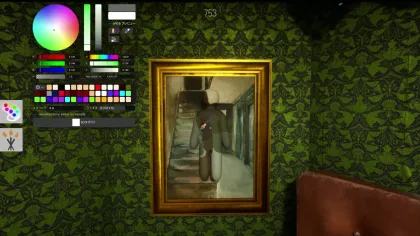
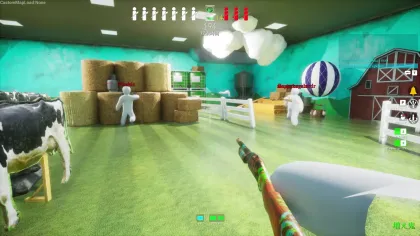

Meccha Chameleon is the kind of score-chasing platformer that makes you sit upright and mutter, “All right, one more run.” It is fast, absurdly stylish, and built around a single brilliant idea: your character changes color to survive, move, and thrive. That simple twist gives the whole game a rhythm that feels equal parts arcade reflex test and puzzle-box sprint. As someone who has spent years bouncing between precision platformers, I can say Meccha Chameleon earns its place by being more than a gimmick. It is sharp, demanding, and memorable in a way many modern indie games try for but do not always land.
The first thing that stands out is how confidently the game commits to its own identity. Meccha Chameleon does not waste time explaining itself with long tutorials or bloated systems. It drops you into a world of neon danger, asks you to read space on the fly, and expects you to learn through movement. That confidence is refreshing. Every stage feels like a compact challenge designed by someone who loves the language of old-school platformers but wants to remix it into something stranger and more elastic. You are not just running and jumping; you are constantly adjusting your mindset to match the color rules of the level, and that keeps the action lively from start to finish.
A platformer that lives on momentum
What makes Meccha Chameleon work so well is the way it turns momentum into a form of intelligence. On paper, the game looks simple: traverse stages, change color, avoid hazards, and push toward the finish. In practice, every few seconds demand a tiny burst of calculation. Do you switch now or after the next jump? Is that ledge safe in your current state? Can you chain movement through this section without resetting your pace? These decisions come fast, but the game is fair about it. When you fail, it usually feels like your own rushed execution rather than cheap design.
That fairness is important, because the game can get intense. Meccha Chameleon is not a cozy walk through colorful scenery. It asks for precision, pattern recognition, and a willingness to retry. The good news is that the loop is so brisk that failure rarely becomes frustrating for long. You usually respawn, recalibrate, and try again before the sting sets in. For experienced players, that makes the game highly replayable. For newcomers, the steepness may be a little intimidating, but the learning curve is manageable if you are patient.
Style, speed, and a surprisingly smart core idea
The chameleon mechanic is the star, and it never stops being useful material for level design. Rather than feeling like a one-note trick, color matching becomes a language the whole game speaks. Enemies, surfaces, hazards, and route choices often revolve around whether your current state lines up with the environment. That gives each room a tactical flavor without slowing the game down. It is a smart balance that prevents the action from becoming pure reaction or pure puzzle-solving. You are always doing both.
Visually, Meccha Chameleon leans into bold contrast and quick readability. The screen is busy, but not in a way that feels hostile. Even during high-pressure stretches, you can usually tell what matters. That clarity is vital in a game this quick. If the art were less disciplined, the whole thing would become chaos. Instead, the presentation supports the design. The world looks playful, but the gameplay feels tightly engineered. That combination helps the game stand out among other indie action platformers.
Controls and feel
The controls in Meccha Chameleon are responsive enough to support the game’s pace, which is exactly what a title like this needs. Precision games live or die on feel, and this one mostly nails it. Jumps come out cleanly, direction changes are snappy, and the color-switching mechanic does not bog down the flow. You never feel like the game is fighting your inputs. If you miss a platform, it is usually because you got greedy, mistimed a switch, or pushed too hard in a crowded section.
That said, the challenge ramps up in a way that may expose anyone who prefers generous forgiveness. There are moments where the level layout demands muscle memory and quick adaptation in equal measure. If you enjoy mastering movement systems, this is a strength. If you want a more relaxed platforming experience, the game may feel sharp-edged. I would not call it punishing for punishment’s sake, though. It is demanding in the best sense: it wants you to improve, and it rewards that improvement with a satisfying sense of flow.
Replay value and that “one more try” pull
The strongest compliment I can give Meccha Chameleon is that it understands compulsion. The results screen, the short stage structure, and the tight retry loop all feed the desire to push a little further. You can chase a cleaner run, a faster time, or simply better consistency. That makes the game ideal for short sessions, but it also works when you settle in for longer stretches. It has the arcade spirit of a game that respects your time while still daring you to spend more of it.
If you are the kind of player who likes to compare personal records, look for hidden routes, or test whether a stage can be cleared with less hesitation, this game will keep you busy. It is not the sort of title that needs a massive world to stay interesting. Its structure is compact by design, and that compactness gives it focus. The best platformers understand that depth can come from repetition done well, not just from size, and Meccha Chameleon understands that lesson clearly.
Where it sits among modern indie platformers
There is a crowd of stylish indie games vying for attention, but Meccha Chameleon avoids feeling derivative because its central concept is so tightly woven into every layer of play. It is not trying to mimic a classic exactly, and it is not chasing trend-chasing spectacle. Instead, it carves out a small but distinct identity. The result is a game that feels handcrafted rather than assembled from familiar parts.
That matters when you are deciding whether to download or play something from a crowded marketplace. Plenty of games promise speed and style; fewer back it up with level design that actually uses its hook well. Meccha Chameleon does. It earns its difficulty, earns its personality, and earns its replay value. I would not call it casual, and I would not call it broad-appeal in the mainstream sense, but for players who like skill-driven platformers, it is a very solid pick.
Verdict
Meccha Chameleon succeeds because it takes one elegant mechanic and builds a whole game around it without overcomplicating the formula. The result is brisk, challenging, and surprisingly addictive. It is the kind of release that feels especially good when you want a focused action platformer rather than a giant systems-heavy adventure. If you like games that ask you to learn patterns, tighten your execution, and keep coming back for a cleaner attempt, this one is worth your time.
There are no gimmicks here pretending to be depth. There is just a strong idea, smart execution, and a pace that never loses its nerve. For fans who enjoy doing a quick download, firing up a session, and chasing mastery, Meccha Chameleon is easy to recommend. It may not be for every player, but for the right audience, it absolutely delivers.
How to download Meccha Chameleon
Availability & Launch: Meccha Chameleon can typically be accessed through official digital storefronts, and depending on the release region it may be free or paid. Check the game’s store page before you install to confirm pricing, launch status, and any demo availability.
Platforms: The game is generally discussed for modern platforms such as PC, and availability on other platforms may vary by release. If a platform is unsupported, you may need a cloud service, emulator, or wait for an official port. Always download from trusted sources only.
Install: To install, open the official store page, complete the download, and follow the on-screen setup prompts. On PC, run the installer or launch through your library client. On mobile or console, use the native store and let the system finish installation automatically.
System Requirements: Minimum PC specs are usually modest for an indie platformer, though you should check the store page for exact details. For Mac or Android, only supported builds should be used, and performance can vary depending on device age and available memory.
Cheats / Mods: Cheats and mods are not always available, and support depends on the platform and community tools. Use only legitimate mods from trusted creators, and note that some versions may restrict alterations or external trainers.
Unblocked Access: Unblocked play in school or work settings depends on local network rules and browser or platform restrictions. If access is limited, the game may not load without permission, and any unblocked method should still respect the rules of the environment.
Pros
- Strong central color-switching mechanic that keeps every stage engaging
- Fast-paced gameplay with a satisfying arcade-style replay loop
- Responsive controls that support precision platforming
- Fair challenge that rewards skill and improvement
- Compact level design that makes the game ideal for short or long sessions
- Clear visual style that supports readability during hectic moments
Cons
- Difficulty may feel steep for casual players
- The game can become repetitive for those who prefer broader variety
- Not ideal for players looking for a relaxed or forgiving platformer